Neon is a noble gas, number 10 on the periodic table. It is colorless, odorless, and chemically inert. Discovered in 1898 by British chemists Sir William Ramsay and Morris Travers, the name comes from the Greek word neos, meaning new.
The most remarkable property of neon gas is that it emits a bright reddish-orange glow when subjected to electric current inside glass tubes. This unique characteristic has made it an indispensable element in the world of advertising and decorative lighting.
History of Neon Signs
The story of neon signs begins in 1910 in Paris. French inventor and engineer Georges Claude produced the first neon lamp by encapsulating neon gas in glass tubes. In 1912, the first neon sign was used on the facade of a barber shop.
During the 1920s and 1930s, neon signs experienced a massive boom in the United States. Iconic locations like Las Vegas, Times Square, and Route 66 gained worldwide fame for their neon lights. During this era, neon signs became an inseparable part of city nightscapes.
How Do Neon Signs Work?
The working principle of neon signs is quite fascinating:
- Glass tubes are heated and bent into the desired shapes.
- The air inside the tubes is evacuated and filled with neon gas or other noble gases.
- Electrodes are placed at both ends of the tubes.
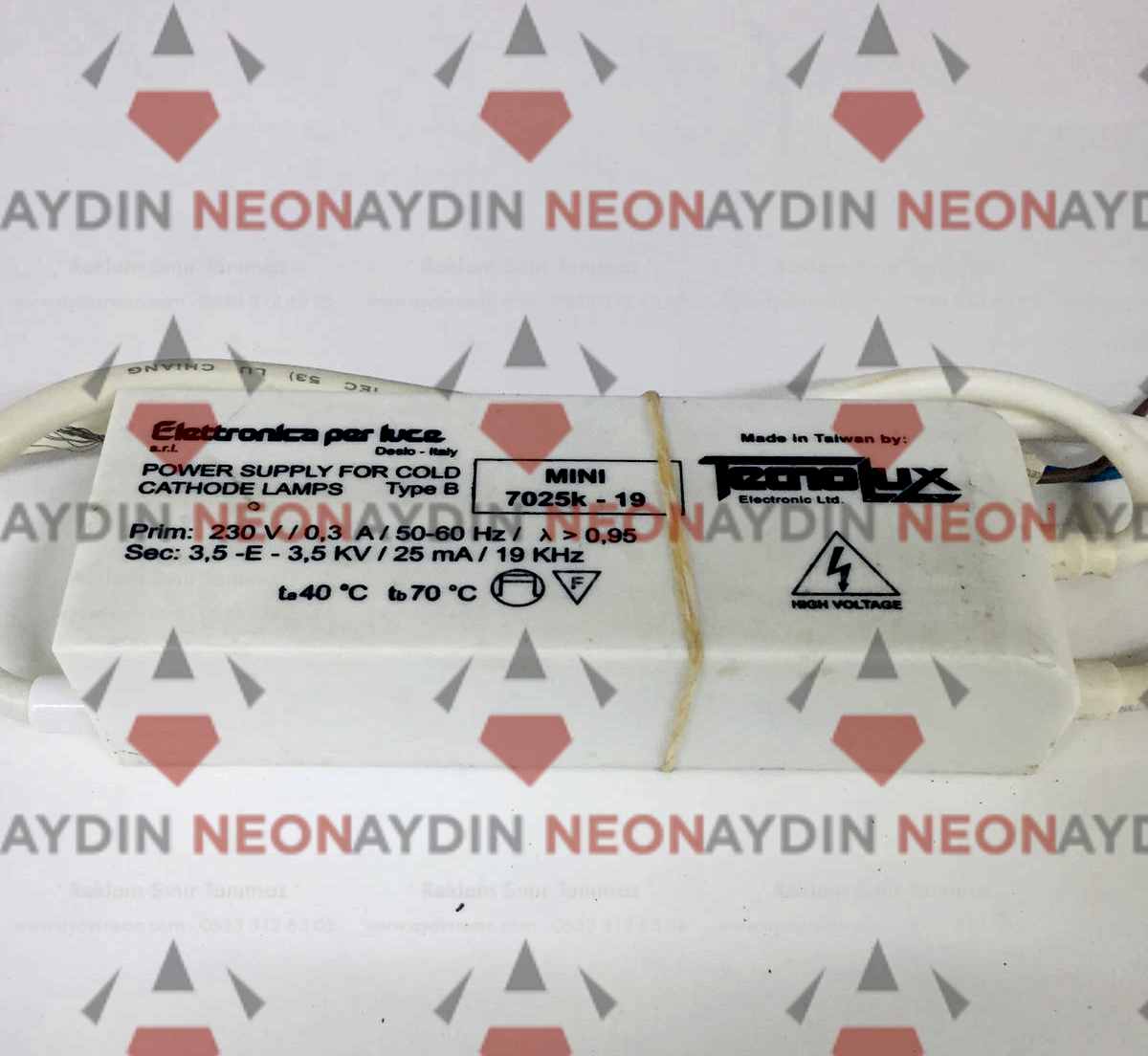
- When high-voltage electric current is applied, gas atoms absorb energy and produce light by emitting photons.
Pure neon gas produces a reddish-orange color, while other noble gases such as argon, helium, krypton, and xenon are used to achieve different colors. Additionally, phosphor coatings on the inner surface of glass tubes can increase color variety.
Uses of Neon Signs
Commercial Use
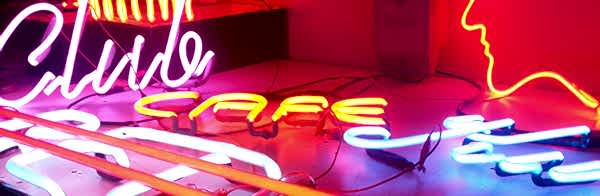
Neon provides an eye-catching and professional appearance for exterior and interior signage of businesses such as shops, restaurants, cafes, bars, and hotels.
Decorative Lighting
Neon signs are becoming increasingly popular as aesthetic lighting solutions for home, office, and venue decoration.
Art and Events
Neon light sculptures and installations attract great interest in the modern art world, while they are also frequently preferred for creating atmosphere at weddings, parties, and special events.
Photography Studios
As background lighting in professional shooting venues, neon signs add a modern and striking atmosphere to photographs.
Traditional Neon vs LED Neon: Key Differences
While traditional neon signs use real glass tubes and gas, LED neon (flex neon) technology has also become widespread today. LED neon signs consist of LED lights placed inside silicone or PVC casings that mimic the appearance of neon.
Advantages of traditional neon include unique light quality, long lifespan, and nostalgic aesthetics, while LED neon offers lower energy consumption, easy installation, and more affordable pricing.
What to Consider When Ordering a Neon Sign
When ordering a quality neon sign, it is important to pay attention to the following:
- Choose an experienced and specialized neon sign manufacturer
- Inquire about the quality of materials to be used
- Evaluate the suitability of the design for your space
- Learn about installation and after-sales maintenance services
- Check warranty conditions
At Aydin Neon, with over 30 years of experience, we provide services in both traditional glass neon and modern LED neon sign production. Contact us for your projects.